
Rhythm>>Expertise>>Mastery
(Or, Why Your Operating Cadence Matters More Than Your Genius)

I took piano lessons for about a decade, thanks to my grandma. I was classically trained, practiced a lot, went to competitions, and could hold my own. I was never that into performing (and was usually a fluttering wreck), but I enjoyed playing and eventually figured out how to manage the butterflies.
My favorite part wasn’t the recitals or the trophies. It was sitting at the piano and feeling my left hand and right hand learn to talk to each other, reading two staffs at once. Keeping one rhythm steady while the other one melodied.
Eventually, my grandma decided that if I was going to play more complicated music, I needed a metronome. We drove across the Kansas border to a slightly bigger town, found the downtown music shop, and picked out one of those spring-powered metronomes that sits on top of the piano and clicks away. It wasn’t pretty, but it did its job. It forced me to stay in time when I wanted to rush or drag.
Looking back, that metronome was my first operating partner. It did exactly what good systems do. It didn’t care about my mood. It didn’t care if I was tired. It gave me a steady reference point so I could build skill on top of rhythm.
I attribute a lot of my enjoyment in business to those years at the piano. Learning to love the practice more than the performance, how structure allows for creativity, and that if your timing’s off, the whole piece feels off (no matter how talented you are).
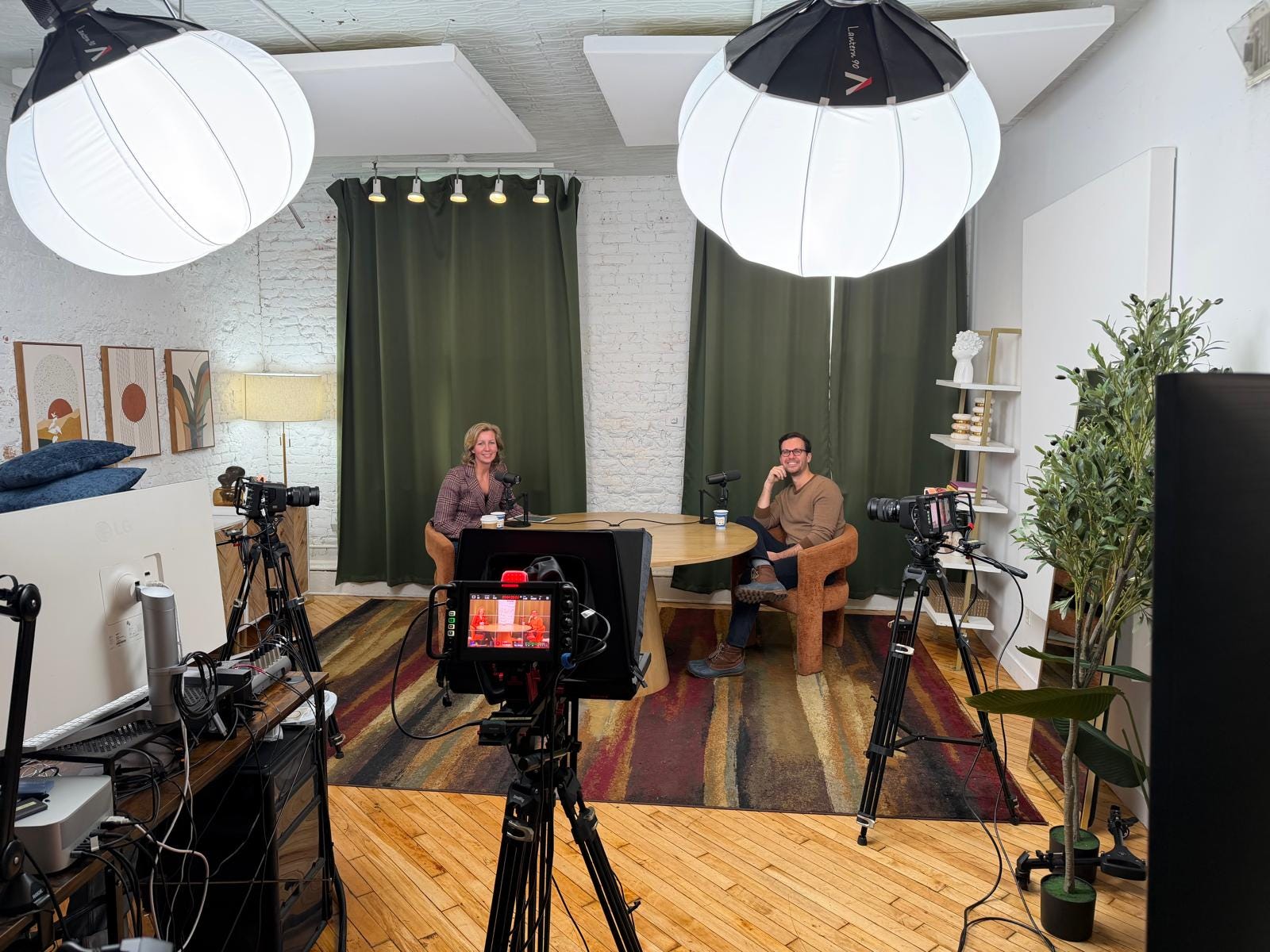
Recently, in the NYC studio, I sat down with Nik Milanovic, Founder of TWIF, and we talked about something that finally put language to this idea for me. Nik said something simple but sharp: people try to earn expertise without earning rhythm first.
The phrase that stuck with me was:
Rhythm > Expertise > Mastery.
It’s a simple motion, but it tracks with how people and companies actually build.
Most of us want expertise, and if we’re honest, we want mastery. We want to be the person who walks into a room and just knows what to do. We live in a culture that loves shortcuts and hacks, so we try to skip past the boring, unglamorous part. (Aka: the hours with the metronome).
The problem is that we keep trying to jump over rhythm, which is where everything real gets formed.
Rhythm comes first
In the Trash Moms episode, Liang and I spent 20+ minutes talking about rhythm. The messy rhythm of being a mom and having a career, filler words (so many “likes”), juggled schedules, and the days where the best we can manage is slightly wrinkled, slightly late, and incredibly overwhelmed.
It was a guards-down conversation – unpolished and very human. Two women, trying to find a beat that fits their actual lives, not the idealized version.
That’s what rhythm really looks like. It isn’t the perfect morning routine or a color-coded calendar. It’s the small, repeatable practices that you keep coming back to because you value who they’re turning you into.
You do the thing. And then, quietly, the thing starts to do something to you.
In my operator brain, rhythm is just another word for practiced consistency.
The check-ins that actually happen and are meaningful.
The financial reviews that don’t get skipped because “this month is crazy.”
The way a founder opens every all-hands with the same kind of clarity, so the team’s nervous system knows what to expect.
Rhythm is what you do when no one’s watching, and it’s also what people feel from you when everyone’s watching.
Right now, I’m rebuilding some of my own personal rhythms. Health, movement, protein, sleep. Letting my nervous system reset after a crucible year. The rhythm isn’t pretty yet, but it’s real.
I’ve built work rhythms the same way.
How I start with a new company.
The listening tours.
The way I read a P&L.
The cadence of product, sales, and marketing conversations.
Those started as choppy, off-the cuff meetings and over time they became more intentional and more reliable. The metronome moved from the top of the piano and became embedded into my calendar and my leadership style.
Then expertise
Once rhythm’s in place, something shifts. You start to recognize patterns and you know what a good week feels like and what a fractured one feels like. You have enough reps behind you that you can say, “I’ve seen this before.”
That’s where expertise starts to emerge.
In companies, this is the point where leaders move from reacting to anticipating. The operating rhythms exist, even if they’re still a little clunky.
You can look at a P&L and see more than numbers.
You can sit in a product review and see the distance between the roadmap and reality.
You can listen to a sales pipeline update and know whether it’s real or wishful thinking.
The risk doesn’t go away, but it does feel different. You can take bigger swings because you’ve got a sense of the field. You’ve lived through misses. You’ve got scars and you’ve got data, and those are both powerful tools.
During my current “fun-employment,” people keep asking if I have a specific fintech niche. A segment. A product type. A favorite use case.
The truth is, I spend less time obsessing over the product and more time reading the organizational markers.
Is the founder humble and willing to put actual skin in the game to scale the business?
Are the people hungry and asking for clarity and direction?
Is there at least one failure we can point to and say, “Here’s how we’ll use that to move forward”?
Is the kitchen on fire and is there a real desire to bring order to the chaos?
If I get a few “yes” answers there, I know the rhythm and expertise muscles can be developed. That’s my kind of gig.
Of course I care about repeatable revenue, strong product market fit, and obsessive customer experience. Those are table stakes. But without rhythm, those things don’t produce change; they just produce pressure.
Mastery is rarer than we admit
Mastery is the part of this framework I feel least qualified to talk about, which is probably a sign that I should at least name it and invite others to weigh in via comments.
For me, mastery isn’t perfection. It isn’t a guarantee that you won’t blow it. It’s when a person or a team can live with constant uncertainty and stay grounded. Meaning, they aren’t hooked by every new signal in the market and their identity and operating cadence aren’t hanging on the next quarterly win.
Mastery looks like:
Knowing you’ll make mistakes and not being destroyed by that.
Digging in when everyone’s bailing out.
Being deeply committed and strangely loose at the same time.
Trusting that even when you don’t know what to do, you know how to figure it out.
Most of us experience mastery in pockets, which is why it’s beautiful to learn from others. I love watching the founder who can walk into a boardroom and tell the truth about both wins and gaps. Or, the operator who can step into a “kitchen on fire” situation and calmly start turning burners down in the right order.
We see it in crafts, too. The brewer, the guitarist, the engineer. Years of rhythm, layered with experience, slowly becoming something that looks like inspired art.
It’s the pianist whose fingers just know where to go and what you’re witnessing in that moment isn’t talent alone – it’s years of metronome work that no one clapped for (except my grandma).
Leaders are rhythm keepers
Here’s where this lands for me as an executive:
As leaders, we don’t just set our own rhythms, we set them for everyone who works with us.
If my calendar’s chaos, my team will feel chaotic.
If I don’t know how to set sprints and deliver on them, nothing will get shipped.
If I treat financial reviews as optional when things are hard, others will do the same.
If I only show up to vulnerable conversations when I have the perfect words, my culture will learn to hide their mess until it’s tidy enough to share.
On the other hand:
When I block regular, focused time to listen without rushing, that becomes a pattern.
When I insist on simple, consistent operating cadences instead of chasing shiny frameworks, that becomes a pattern.
When I tell the truth about my own in-between seasons, it gives everyone around me permission to do the same.
This is why I care so much about operating playbooks for founders and executives. It isn’t about corporate hacks. It’s about naming the rhythms we want to repeat, because we know they’ll form us and our teams.
Rhythm.
Then expertise.
Then, if we’re willing to be formed and reformed, maybe small pockets of mastery over time.
In this season, I’m paying more attention to the rhythms I choose, personally and professionally. I’m asking:
What am I actually practicing?
What is that practice forming in me?
What rhythms, expertise, and mastery am I teaching to the people who work with me?
If you’re leading anything right now, from a startup to a team to a family, you’re already a rhythm keeper. Here’s to building ones that make us more whole, not just more productive.